|
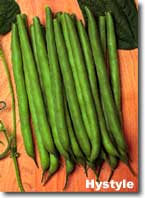
A bean created by Harris Moran Seed Company is the best bone-building bean, according to the USDA.
Recent research that measured calcium in six green bean varieties revealed that Hystyle contained more bone-building calcium ? actually double its
nearest competitor -- than any other commercially grown variety.
While most consumers usually link calcium to milk, researchers at Harris Moran Seed Company have found ways to pack nutrients into
Hystyle and other
HM vegetables.
"Vegetable breeders have traditionally bred new varieties for
the growers who buy their seed, and then assume the nutrients will
be there," says Jeff McElroy, vice president of research at
Harris Moran in Modesto, CA. "So it made sense to breed for
horticultural attributes such as yield, disease resistance and
such."
"Breeding for the
end user -- the consumer -- is something we've wanted to do for
years. We'll still breed for horticultural traits but we'll also
make sure it's good for you."
That emphasis on the
consumer coincides with the overall renewed interest in nutrition
these past few years.

|
That interest compelled scientists at the Children's Nutrition Research Center in Houston, Texas, to conduct research that compared calcium in snap
beans. The idea was to see how foods can better nourish children.
Calcium is especially important for children when their bones are growing. Dairy products such as milk are excellent sources. Beans and other veggies
can also provide a substantial portion of the requirements. Additionally, these foods could play a bigger role for children who can't tolerate milk
sugar.
In the Houston study, the Hystyle green bean had double the calcium of a variety called Labrador. The reason?
Hystyle is better at conserving water,
according to plant physiologists Michael Grusak and Kirk Pomper.
Water dilutes calcium moving through a bean plant, reducing the amount reaching the pods.
|


|
USDA-ARS
plant physiologist
Michael Grusak examines roots
of hydroponically grown
green bean plants.
Photo by Jack Dykinga. |
Tiny pores called stomates open and close to control the
speed at which water enters and leaves the plant. This action is genetically and environmentally controlled.
Overall transpiration in Hystyle was about half that of Labrador. The lower transpiration meant higher calcium concentrations in
Hystyle xylem stream.
The xylem transports liquid and mineral nutrients from roots to shoots, much like arteries carry oxygen-rich blood in humans.
That science speak translated means Hystyle builds strong bones. And seed industry trends show breeding for nutritional content may be the wave of
the future.
|


