Ithaca, New York, USA
December 5, 2025
>> CRISPR primes goldenberry for fruit bowl fame
>> La edición genética logra plantas compactas de Physalis (Aguaymanto) aptas para la agricultura a gran escala (ChileBio)
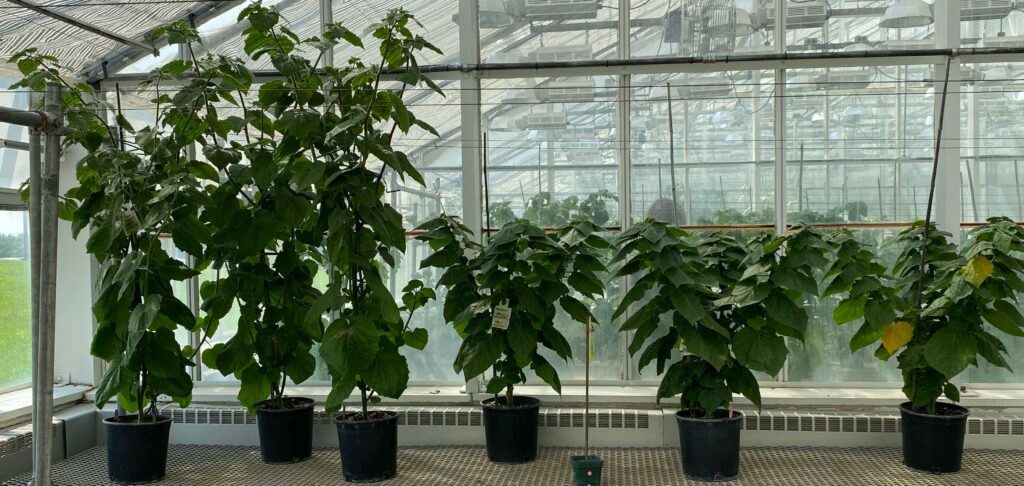
Goldenberries taste like a cross between pineapple and mango, pack the nutritional punch of a superfood, and are increasingly popular in U.S. grocery stores. But the plants that produce these bright yellow-orange fruits grow wild and unruly—reaching heights that make large-scale farming impractical.
Researchers at the Boyce Thompson Institute (BTI) helped solve that problem. Using CRISPR gene editing, a collaborative team including BTI professor Joyce Van Eck engineered compact goldenberry plants that are 35% shorter than their wild relatives, making them viable for commercial agriculture.
“Goldenberry has tremendous potential as a nutritious crop, but its large, bushy growth habit has hindered commercial production,” said Van Eck. “These new compact plants can be grown at higher density, don’t require extensive staking or trellising, and are much easier to maintain and harvest.”
The research, published in Plants, People, Planet, demonstrates how plant science-based solutions can rapidly improve minor crops that haven’t benefited from traditional breeding programs.
From wild to farmable
Native to the Andean region of South America, goldenberry (Physalis peruviana) has been consumed for centuries but has undergone little domestication. Colombia currently produces more than 20,000 tons annually, with 40% exported to meet growing global demand.
The team leveraged knowledge from related Solanaceae crops, targeting the ERECTA gene that regulates stem length in tomatoes and groundcherries. Because goldenberry is tetraploid—containing four sets of chromosomes—the researchers needed to edit two separate copies of ERECTA.
Using CRISPR technology and transformation methods developed at BTI, they successfully generated plants with precise edits in both gene copies. After crossing the edited plants to select for preferred fruit flavor, the team produced stable “Erecta” lines that have 50% shorter internodes than wild-type plants.
The compact plants produce fruits averaging 3.3 grams, which are only slightly smaller than commercially available goldenberries sold in U.S. markets.
The team has already secured USDA clearance, confirming that the edited plants are free from plant pest regulations. Now, they’ll be seeking FDA approval so growers can proceed with commercial production immediately.
Beyond goldenberries
A handful of crops—wheat, rice, corn, soybeans—dominate global food production, creating a fragile system vulnerable to disruption and disease. Meanwhile, hundreds of nutritious “minor crops” remain underutilized, often trapped between wild origins and commercial viability.
“This work demonstrates how gene editing can complement traditional plant breeding for minor crops,” Van Eck said. “We can integrate decades of breeding knowledge from major crop species, use CRISPR to make precise changes to specific traits, and accelerate the development of improved varieties—adding a powerful new tool to plant breeders’ toolkit.”
The team has identified several promising next steps for advancing goldenberry cultivation, including increasing fruit size, eliminating sticky acylsugars on fruit surfaces, and enabling synchronized ripening for efficient harvest. And the approach extends beyond goldenberries—similar strategies could improve passion fruit, groundcherry, and other underutilized crops with strong nutritional profiles and regional importance.
“Improving nutritious minor crops like goldenberry expands dietary diversity and creates new opportunities for farmers,” added Van Eck. “That’s exactly the kind of plant science-based solution BTI exists to deliver.”
The research was supported by the National Science Foundation Plant Genome Research Program and involved collaboration with Cold Spring Harbor Laboratory and Johns Hopkins University.




 Topics
 Species