Westfield, Indiana, USA
December 2, 2025
The story with insect pressures in recent years isn’t about new pests or changing patterns; it’s about familiar ones showing up in greater numbers, says Chris Ouzts, an AgriGold agronomist in the Deep South.
“We’re seeing more extreme, threshold-breaking numbers necessitating treatment,” he elaborates. Fortunately, effective strategies and tools are available to help protect crops from these threats.
Top insect threats
Corn earworm, southwestern corn borer and stink bugs topped Ouzts’ list of local insect pressures in 2025, and that’s the case most years. “We tend to see the same repeat offenders year after year,” he says. While he also encounters issues with black cutworm, sugarcane beetles, fall armyworm, and “critters” like whitetail deer and racoons, the main offenders remain corn earworm, corn borer and stink bug.
Farmers farther north would likely add another insect to that list: corn rootworm. “While pressures were down in 2025 compared to previous years, it was still a major threat that impacted yields — especially for corn-on-corn acres,” says Jeff Morey, an AgriGold agronomist in western Iowa.
Know your bugs
Successful pest management starts with a clear understanding of local insect pressures and their preferred host, Ouzts says. That can guide rotation plans, hybrid choices and seed treatments.
Ouzts also encourages farmers to scout early and often — especially if winter is mild. A hard freeze can help knock down insect populations. Without it, he warns farmers should prepare for elevated pressure.
New options for fighting corn earworm
The Trecepta® trait package gives farmers a powerful tool for fighting corn earworm, which Ouzts deems the main threat in his area. The trait package provides protection against corn earworm and other Lepidopteran (winged) insects like black cutworm and fall armyworm.
Planting corn earlier is another effective strategy for farmers in Ouzts’ region. “If farmers can plant early enough to get ahead of the July moth flight, they may be able to avoid a lot of the damage associated with corn earworm,” Ouzts explains.
Earlier planting can also help with management of southwestern corn borer. Planting traited corn hybrids are another way farmers can manage the pest.
Bring down corn rootworm populations
Managing corn rootworm involves several steps, the most impactful being crop rotation. “Putting in a rotation of soybeans is a great way to disrupt the cycle for rootworm pressure, especially in heavy corn-on-corn areas,” Morey says.
But that’s not always possible, especially for farmers with livestock operations. Morey encourages farmers in that position to use traits that provide strong corn rootworm protection. “Skipping these traits to cut costs can lead to greater damage and long-term yield loss.”
In fields with persistent rootworm pressure, beetle bombing or a post-emergence insecticide application can also help. Morey explains, “Male rootworm beetles emerge first, followed by females. Applying insecticide around the late R1 stage targets egg-laying females and provides the best control.”
Clean fields can curb stink bug and cutworm damage
Stink bugs often hide in clumps of rye grass in fields or ditch banks alongside corn fields, while black cutworms thrive in grassy or high-residue fields. Managing residue, keeping fields clean and managing edge-of-field areas are essential.
Plant a mix of seeds to spread risk
Agronomists like Ouzts and Morey can help farmers choose product mixes that deliver the best outcomes for their farms. “We listen, ask questions and help farmers build seed solutions that drive progress,” Ouzts says.
Planting a diverse mix of corn seed products is key to mitigating risk, according to Ouzts. “Relying on a single corn hybrid or soybean variety is like running an entire offense with just one play,” he says. “Planting multiple seed products keeps you in the game.”
Connect with your local AgriGold agronomist to get started building a seed strategy that helps combat your challenges and drives progress on every acre.
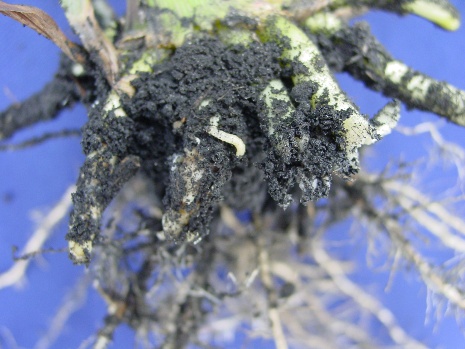
Corn rootworm pruned roots and clipped yields for some farmers in 2025.
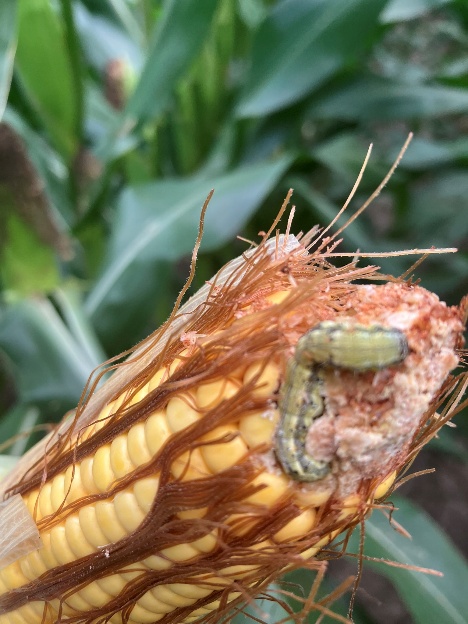
Earlier planting and use of Trecepta® traits can help farmers protect yields against corn earworm damage.
ABOUT AGRIGOLD
AgriGold offers high-performing hybrids paired with the latest agronomic knowledge and data to achieve exceptional crop performance, year after year. Based in Westfield, Indiana, AgriGold is for the farmer who wants a true seed partner that is an ally in the field. For more information, visit AgriGold.com and follow us on Facebook, Instagram, LinkedIn and X, formerly known as Twitter.
ABOUT GDM
GDM is a global group dedicated to the research, development and commercialization of intellectual property products in plant genetics for row crops. With an innovative approach, the company integrates advanced technologies and exceptional talent to promote innovation, collaboration, and the development of new businesses that positively impact the agro-industrial value chain. GDM operates in 15 countries and has a team of 3,400 employees. Find more
information at GDMSeeds.com.
ABOUT AGRELIANT GENETICS
AgReliant Genetics, a wholly owned subsidiary of GDM, is committed to providing trusted seed solutions that help farmers grow by delivering one-of-a-kind, high-performing hybrids. Founded in 2000, AgReliant Genetics benefits from direct access to a global germplasm pool and has a top four corn research program in North America. Through their seed brands, AgriGold® and LG Seeds in the U.S. and PRIDE® Seeds in Canada, they proudly offer the latest innovation to farmer customers, whether they grow corn, soybeans, sorghum or alfalfa. Discover more at AgReliantGenetics.com.




 Topics
 Species