United Kingdom
April 29, 2026
Scientists have uncovered a previously hidden chemical dialogue in the soil that could open new strategies for managing wireworms, a major pest of maize and many other crops, including wheat and potatoes.
New research shows that maize plants subjected to simultaneous attack above and belowground release a distinct blend of root chemicals that strongly attracts wireworms. These pests damage roots and seeds, leading to major yield losses.
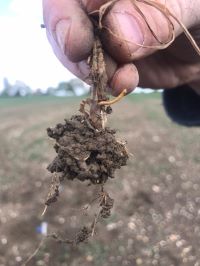
Wireworm damaged seedling
The study found that when maize roots are fed on by wireworms while leaves are also attacked by European corn borer caterpillars, the plant produces a unique chemical signature composed of small lipophilic molecules in the rhizosphere, the narrow zone of soil surrounding roots. Wireworms were far more attracted to these dual-attacked plants than to undamaged plants or those facing a single pest. Researchers recreated this chemical cue as a synthetic blend, which successfully attracted wireworms not only in the laboratory, but also in semi-field and field conditions. The findings offer rare insight into how plants coordinate responses to multiple attackers and highlight the rhizosphere as a largely untapped frontier for crop protection.
“Most research on insect communication in crops has focused above ground, but a huge amount of ecological interaction happens below the soil surface,” said Dr József Vuts from Rothamsted Research, “We’ve shown that root chemicals can shape the behaviour of a major pest, creating exciting opportunities for smarter and more sustainable pest management.”
The findings suggest these newly identified chemical cues could be harnessed in attract-and-trap systems or other ecologically based strategies to manage wireworms, reducing reliance on conventional pesticides.
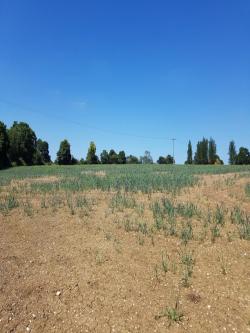
Crop field damaged by wireworms
The study also deepens understanding of how plants integrate attacks across different tissues. Rather than responding independently to root and leaf damage, maize mounts a systemic response that alters its chemistry and, in turn, pest behaviour. The researchers note that these root-derived compounds likely operate alongside other cues, such as carbon dioxide and soil conditions, that help guide wireworms to host plants.
Beyond pest management, the work sheds light on the rhizosphere as a dynamic yet poorly understood environment, where plants, insects and microbes constantly interact. The researchers say identifying which individual compounds drive wireworm attraction will be a key next step.
Publication
Aboveground and Belowground Insect Herbivory Changes Maize-Wireworm Interactions via Root Volatile Cues




 Topics
 Species